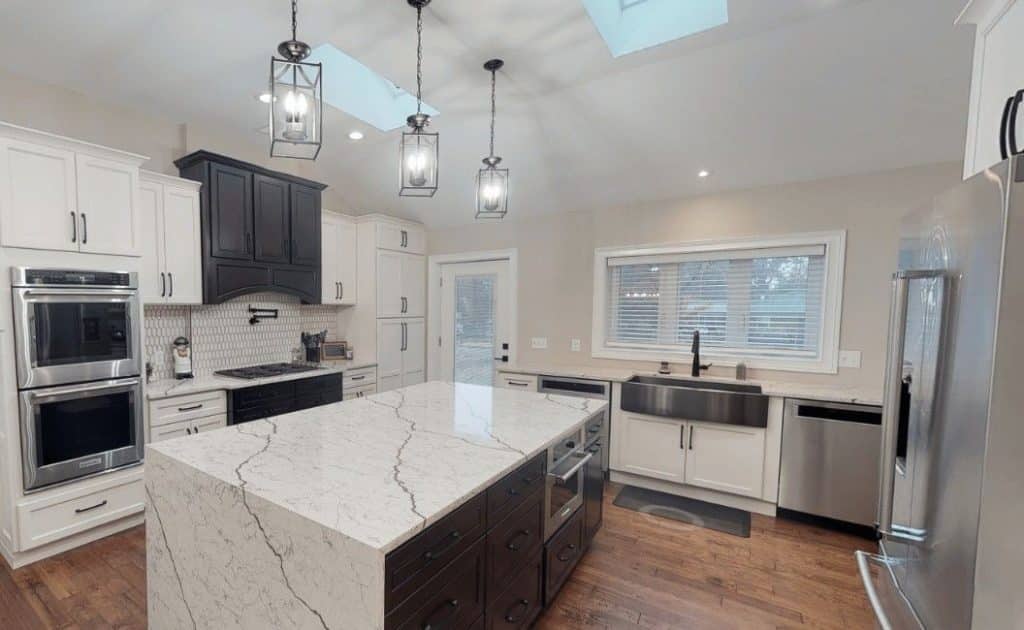
Search for how long a kitchen remodel takes, and most answers give you six to twelve weeks. That number is not wrong, but it answers the wrong question. Six to twelve weeks describes the construction phase, the part where a crew is actually in your kitchen. It says nothing about how long you’ll wait before that crew shows up. For a reputable, in-demand contractor, that wait can be the longer half of the timeline. Here is the complete picture, drawn from how one Greater Cincinnati remodeler, TMC Construction Services, actually runs its projects.
The Honest Answer Has Two Parts, Not One
A complete kitchen remodel has two distinct timelines, and most articles only talk about one of them.
The first is the wait before construction starts. It covers the consultation, design, material selection, and the contractor’s own production schedule. The second is the construction phase itself, the demolition-to-final-walkthrough stretch most timeline guides describe. TMC Construction Services uses its own full-time crew instead of rotating subcontractors, and that choice shapes the first phase directly. It regularly runs six to twelve months before a single cabinet comes out. The construction phase itself, once it starts, typically runs from a few weeks to about three months. The exact length depends entirely on the scope of work. Both of those numbers are entirely real and worth knowing. Treating only the second one as the answer causes real frustration. Homeowners end up upset by a delay that was never a delay, just a part of the timeline nobody mentioned.
How Long You’ll Likely Wait Before Work Even Starts
This is the part most homeowners genuinely do not see coming.
A contractor that self-performs all of its work has a real limit on capacity. It can only run as many projects at once as it has crew for. TMC Construction Services states its production schedule fills six to twelve months in advance. The same crew shows up every day until a project is finished, instead of splitting time across multiple jobs. Real client reviews back this up directly too. One TMC client testimonial puts it plainly: “we had to wait a bit for our turn.” Once the crew started, though, they showed up daily until the job was fully done. That tradeoff is intentional, and it cuts both ways. The wait is real, but so is the payoff. A dedicated crew, a fixed price, and a project that never stalls because someone else’s job took priority that week. The practical lesson here is genuinely a simple one. If a kitchen remodel is even a possibility for next year, the consultation should happen now, not next spring.
The Construction Timeline By Scope
Once a project is on the calendar, the actual construction timeline depends almost entirely on scope.
A minor update, like new countertops, a backsplash, or cabinet refacing, stays within the existing layout. It typically takes two to five weeks to build. A full renovation that keeps the existing footprint generally lands in the six to ten week range. Cabinets, countertops, appliances, and fixtures all get replaced, but plumbing and electrical stay put. A complete gut renovation with a new layout, moved plumbing, and reconfigured electrical typically takes eight to twelve weeks. The single biggest lever on that range is whether the layout changes at all. Moving plumbing and electrical adds real time for rough-in work and inspections. A like-for-like replacement never has to deal with either one. Keeping the existing footprint is consistently the fastest and most budget-friendly path. That is worth knowing before falling in love with a layout that requires moving the sink across the room.
See real completed examples in TMC’s kitchen projects portfolio.
A Week-By-Week Look At What Actually Happens
Once material delivery dates are confirmed, the construction schedule gets built around them, not the other way around.
This sequencing matters, since custom cabinetry alone can take several weeks to manufacture before it ever reaches the job site. The process generally starts with a free home visit to assess the space, discuss goals, and review budget. From there, the design phase covers cabinetry, countertop material, backsplash tile, flooring, lighting, and fixtures. A written, fixed-price scope of work gets locked in before construction begins. Only once cabinets, countertops, appliances, and specialty fixtures all have confirmed delivery dates does the actual installation schedule get set. Demolition and framing come first, followed by plumbing and electrical rough-in. Cabinet installation and countertop templating happen next in the sequence. Countertops are typically cut to fit the cabinets after they are in place, not before. Tile work, painting, and trim finish out the project, followed by a final walkthrough. Each of these stages depends on the one before it finishing correctly. That is exactly why a delayed cabinet delivery or a failed inspection at one stage pushes everything after it back.
What Pushes A Timeline Longer Than Expected
A handful of specific surprises explain most of the timelines that run longer than planned.
Older homes hide problems behind the walls that nobody can see until demolition exposes them. Outdated wiring or plumbing turns up regularly in homes built decades ago. Addressing it correctly adds time that no estimate can fully predict in advance. Custom cabinetry, rather than stock options, takes meaningfully longer to manufacture and ship. That is exactly why locking in cabinet selection early in the design phase matters so much. Layout changes mid-project reset parts of the schedule that were already locked in. Deciding partway through that the island should move, or that an extra outlet belongs somewhere new, is a common example. None of these factors are reasons to avoid a remodel. They are simply the honest list of what separates a six-week project from a twelve-week one. A good contractor walks through each of them with you before construction starts, not after something goes wrong.
How To Actually Plan Around This Timeline
Two decisions, made early, do more to keep this timeline realistic than anything that happens once construction starts.
Start the consultation process well before you actually need the kitchen finished. The production-schedule wait is the single biggest variable in the whole timeline. It also has the least flexibility once you are already on the calendar. Decide early whether the layout is changing or staying put. That single choice affects construction duration and total budget more than almost any material selection that comes after it. Everything else, cabinet style, countertop material, tile pattern, can be worked out during the design phase without threatening the schedule. That holds as long as those decisions get locked in before delivery dates get confirmed. A realistic timeline is never just a guess. It is really just a sequence of dependencies. The homeowner who understands that sequence has far fewer surprises than one who only asked how many weeks it takes.
Real client experiences with this exact process are documented on TMC’s testimonials page.
Get Your Real Timeline, Not A Generic Estimate
The fastest way to know your actual timeline is the same first step every TMC project starts with. Brian Martin visits your home, free of charge, to assess your space, your goals, and your budget. From there, you get a real production date, not a guess pulled from an article. Schedule your free consultation or call (513) 781-3000 and find out where your kitchen remodel actually lands on the calendar.